Paint damage is something no Porsche owner wants to see, but in Dubai, it becomes almost expected without the right protection. Our spring heat combined with sand-filled air does not mix well with luxury finishes. Even the strongest paint jobs can start to wear down after facing months of desert driving. UV rays beat down daily, the wind kicks up grit, and before you know it, the clear coat starts losing its shine.
That is where Porsche bodywork specialists come in. We know the specific types of damage caused by desert weather and how to treat them the right way. It is not just about patching up scratches. It is about keeping the car looking like it should and protecting it from bigger problems later on.
What Desert Weather Does to Porsche Paint
The damage does not happen all at once. It creeps in slowly. Sand may seem fine enough to ignore, but it acts like sandpaper over time.
- Fine particles carried by wind from sandstorms settle on paint and scratch the surface when wiped or moved
- Constant UV exposure weakens the outer layers of clear coat and slowly fades the paint underneath
- Temperature swings between cool indoor parking and outdoor heat make the paint expand and contract, which can create cracks or peeling over time
There is no single weather event that causes all of this. It builds up. By spring, many owners start to notice the toll taken during the recent dry, windy months. And with summer around the corner, that exposure only gets worse if left untreated.
How Paint Damage Starts and What to Watch For
We always tell owners to pay attention to early signs. Small issues are easier to fix now than later when they have spread across the panel.
- Look for dull spots where the gloss is fading, usually from UV damage
- Watch edges where debris hits first, like the front bumper, side mirrors, and hood corners
- Check for early peeling of the top coat or tiny chips, especially after driving during poor weather
When sand or heat breaks through the outer layers, the paint underneath reacts fast. Without immediate care, it leads to oxidation and larger sections flaking. Once the base layers are exposed, damage moves quicker, and the cost to recover the clean look goes up.
How Bodywork Specialists Diagnose and Treat Paint Issues
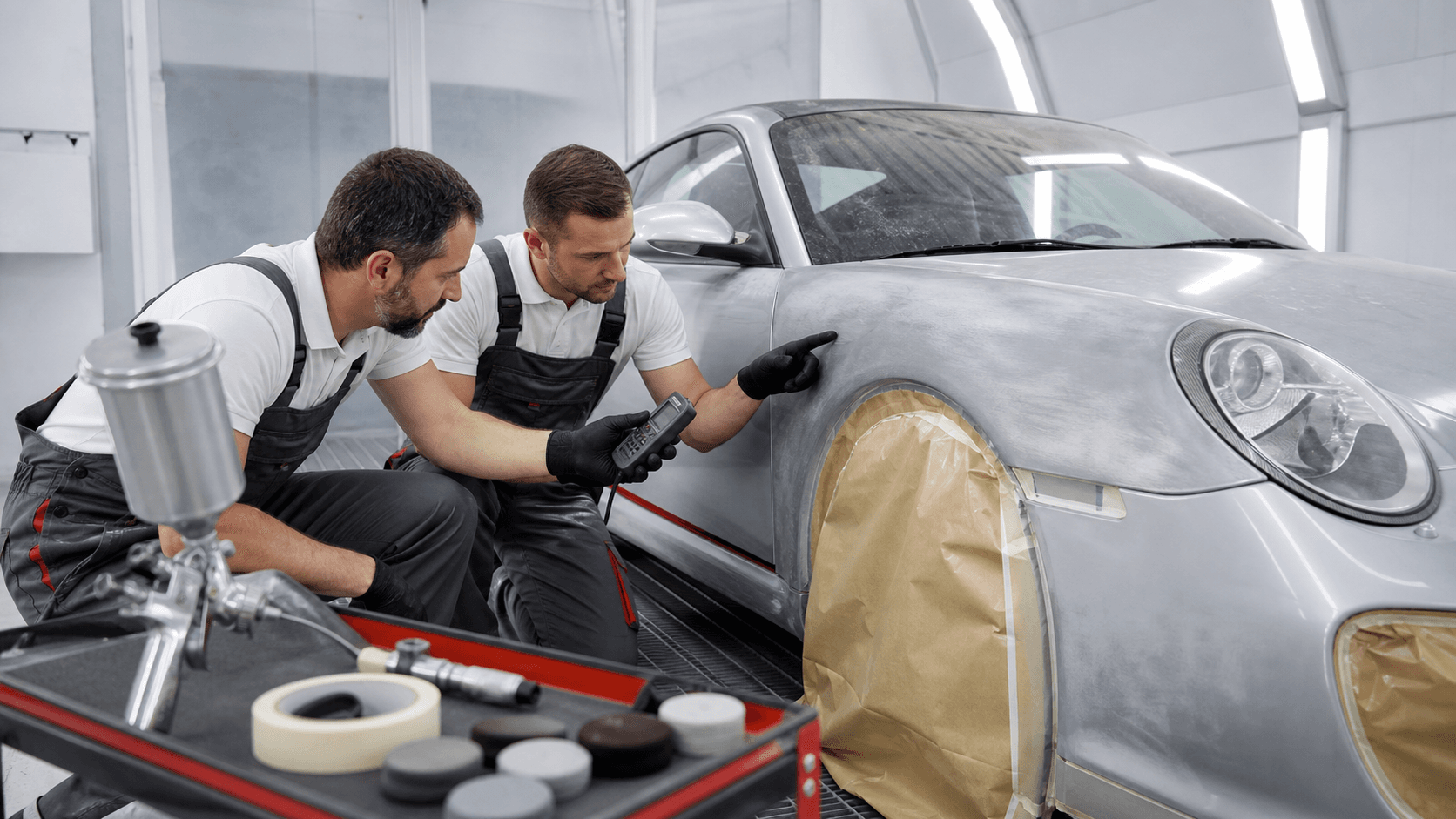
After years of working with Porsche models in Dubai conditions, we have developed an approach to finding damage others might miss. That starts with a full visual under proper lighting, followed by surface testing to know exactly what is worn and how deep.
- Oxidation shows up as flat, chalky patches that look different under the sun
- Scratches vary from surface-level swirls to deep scrapes caused by airborne grit
- Pitting happens from repeated sand impact, especially around grilles, skirts, and fenders
Porsche bodywork specialists pay close attention to how different models use paint. Not every 911 or Cayenne uses the same layer thickness or clear coat. We match repairs to the exact shade, blend it across adjacent panels, and rebuild protection layer by layer. That is why off-the-shelf fixes do not hold up. It is not just about color. It is about how the paint was meant to respond to everything the road throws at it.
Repair Methods That Hold Up in Desert Conditions
It takes more than repainting to fix a car that has been sandblasted by dry season roads. We use a mix of isolation, layering, and protection to make sure the fix lasts through the months ahead, not just weeks.
- Controlled environments prevent more particles from getting into the fresh paint
- Multi-stage paint correction smooths the surface before new paint layers are added
- Color is rebuilt in matching coats, followed by fresh clear coat
According to our service center, our Porsche bodywork specialists use only manufacturer-approved paints and state-of-the-art application systems, ensuring every job meets or exceeds factory standards. We perform all paint repairs and protection applications in a purpose-built, dust-controlled environment designed for high-end vehicles.
Once the repair is done, we usually recommend long-term protectants. Paint protection film helps shield panels against stone chips and low-grit impact. Ceramic coatings seal the surface better than wax or polish, helping the paint resist UV and dust. These make spring maintenance less frequent and keep the work we did from wearing down too soon.
Keeping Paint Strong Between Services
Even small steps help if your goal is to keep the car sharp between appointments. Especially once the warm season kicks in, you want to avoid adding stress from everyday habits.
- Rinse off sand after drives, even if it looks like the car is not dirty
- Park with thought, shade makes a difference, even if it is for half the day
- Skip the automatic car washes with stiff brushes or cheap chemicals
Every Porsche holds its shine in a different way, depending on how much time it spends outdoors, what roads it is driven on, and how much protection it already has. Doing proactive paint work before summer rolls in is smart scheduling. Desert heat only speeds up breakdown after winter buildup. Early spring is your gap to fix what the cooler months may have hidden.
Protecting the Finish That Makes a Porsche Stand Out
Where you drive matters as much as what you drive. Owning a Porsche in Dubai means living with sand, sun, and sudden heat shifts. All of that wears on paint, no matter how careful you are. That is why attention from Porsche bodywork specialists is not just paint deep. It is about stopping problems before they spread.
Taking this kind of care early saves time later. With spring rolling through and summer about to raise the pressure, now is when repair work makes the biggest impact. Every effort you make now helps your Porsche stay smooth, sharp, and protected while the weather gets more intense. It is the difference between watching damage grow and staying ahead of it.
Preserve the stunning finish of your Porsche with the expertise of Porsche bodywork specialists at Starpit. Our skilled team is dedicated to identifying early signs of paint wear and providing solutions that withstand Dubai's harsh desert conditions. Don't wait until small scuffs turn into costly issues; reach out to us today and ensure your vehicle remains as pristine as the day you bought it.