Owning a Porsche in Dubai means dealing with more than just heat. By the time we reach August, the air tends to dry out, but dust levels stay stubbornly high. Gulf dust creeps into places you would not expect, and over time, it can start to interfere with the way your car sounds, drives, and even feels. That is why regular Porsche maintenance is important, especially during the end of the dusty season when buildup reaches its peak.
Late summer may not bring sandstorms every day, but the lingering grind from dust particles can still wear things down faster than usual. Dirt gets into moving parts and causes slow, quiet damage you do not notice until something stops working the way it should. Knowing how this kind of environment affects your car helps you stay one step ahead of wear before it turns into more expensive repairs.
How Gulf Dust Enters and Impacts Vehicle Systems
Gulf dust does not just coat your car's surface. It ends up in places that matter. Most of it gets pulled in naturally through vents and filters as you drive, especially with the AC blowing full-speed like most people use it in August.
- Dust and salt particles settle into the air intake system and collect on the filters
- Vents running into the cabin bring in dust along with outside air
- Sand gets trapped in spots like door hinges, brake parts, and under the underbody panels
These are not areas you check day to day, so it is easy to assume everything is working fine. But when dust builds up in suspension joints or brake calipers, it can cause uneven wear or squeaks that you will hear before you feel them. Inside the car, it can leave AC vents feeling clogged, making cooling way less effective than it should be. Over time, that kind of buildup does not just affect comfort, it chips away at the car's longevity.
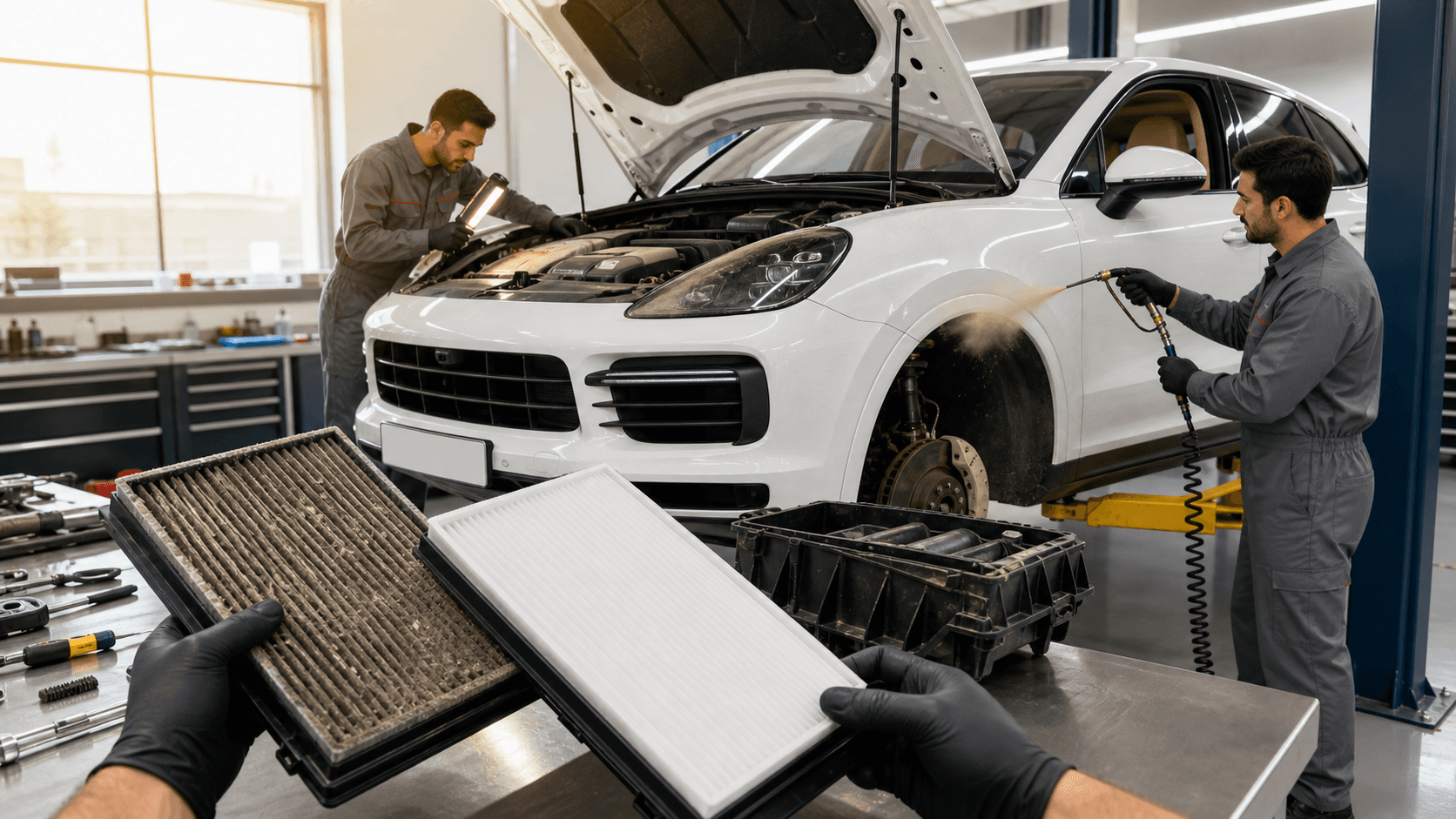
For example, when dust gets into the air intake, it can reduce the efficiency of your Porsche's engine by restricting proper airflow. This forces the engine to work harder than usual, especially during the hottest months, and that extra strain can add up over time. Once air filters collect enough dust and salt, they stop working as well. The car's ventilation system must then work twice as hard to keep fresh air coming in, making the AC seem less powerful than normal.
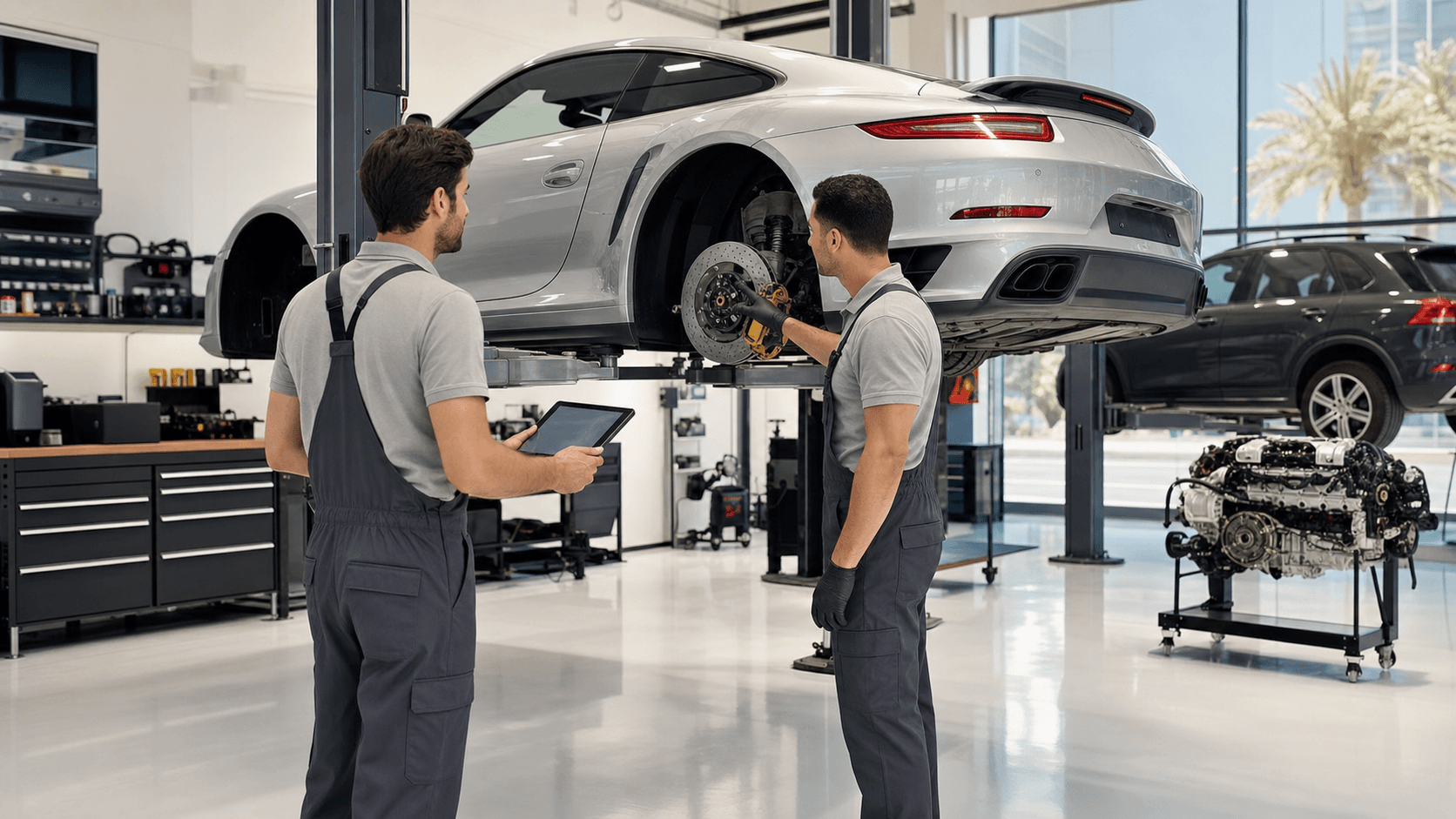
Brake parts and undercarriage areas are especially vulnerable to trapped dust and sand. Every time the brakes are used, fine particles can grind against the surfaces, slowly wearing them down. After a while, you begin to notice squeaks, uneven braking, or even vibrations that weren't there before. It all adds up quietly until a bigger problem shows up.
Common Maintenance Challenges During Dusty Months
The longer your car takes in dusty air, the more wear it absorbs with almost no warning signs. Performance issues tied to dirt and grit usually start small.
- Clogged engine air filters reduce airflow and make the engine work harder
- Cabin filters stop trapping dust properly, leaving the interior stuffy and filled with fine particles
- Paint, plastic, and headlights take a constant beating from wind-blown grit
During late summer, even city traffic stirs up fine sand. Parts like the headlights or rearview sensors become dull from constant exposure. Dirty filters and mild abrasions may not seem urgent, but they quietly chip at performance and appearance. Regular Porsche maintenance can help catch wear during this time before it spreads to bigger parts of the car.
You might not see these issues right away, but small warning signs often point to trouble coming. The car's engine could feel like it's struggling or sound a little rougher. The cabin air starts feeling heavier, and you might find yourself cleaning the dash and screens more often as dust collects quickly. Even features designed for safety, like parking sensors and cameras, get less reliable when grit blurs their lenses or covers their surfaces. If these problems are not caught early, what began as a small maintenance issue can turn into a much larger one, costing more time and money down the line.
Another issue during these months is the steady build-up on the vehicle's paint and headlights. Grit blown around by the wind slowly scratches these surfaces, making them lose their shine and clarity. The small scratches on headlights, for example, can make nighttime driving less safe since they block or bend the light.
Late Summer Strain on Performance Components
Heat and dust do not work together well, especially in performance vehicles like a Porsche. This time of year, parts already stressed by summer traffic are more likely to act up or slow down.
- Radiators and cooling systems struggle when fine debris clogs airflow around them
- Dust dries out rubber seals that should stay flexible, leading to minor leaks or squeaks
- Brakes and sensors lose accuracy if build-up interferes with contacts or readings
Electronic systems like stability control and parking assistance rely on airflow and sensor clarity. Even small obstructions caused by dust can throw performance off. Timely Porsche maintenance this season lets us see which parts are holding up and which ones are starting to feel the pressure. That keeps the road feel you are used to from slipping out of sync.
Getting the radiator checked is especially important, as dust collecting on its fins reduces its ability to cool the engine as effectively as possible. When the cooling system can't keep up in late summer, your risk of engine overheating goes up, sometimes with almost no warning. Rubber seals around windows, doors, and the trunk lose their stretch when coated in dust for weeks, turning minor leaks into big comfort problems as air and water get in more easily.
Sensors, computer modules, and electrical contacts also face bigger risks during this season. When exposed to fine dust for too long, sensors start acting up, giving warning lights or failing to read road conditions. Performance features like adaptive cruise control, parking sensors, and backup cameras can lose their accuracy, making driving less smooth and predictable.
Visual Signs That Call for Inspection or Cleaning
Some signals are loud, like a warning light or a strange noise. Others show up slowly and are easy to miss until the damage is harder to undo.
- Interior airflow that feels weak or delayed, even with the AC on high
- Fine dirt near vents, screen edges, or seams where doors and windows meet
- Brakes that start to squeak, grind, or stutter while stopping
The outside of your car might look dusty most days, but it is the layer that sticks under the car or around the trim that causes the most trouble. Clear headlights that start to look cloudy or windshield wipers that squeak every time they pass are both signs of buildup. When we notice more than one of these at a time, it is usually a signal to look beyond surface cleaning and check for something deeper.
You may also notice a musty smell coming from your car's AC when dust settles deep in the filters. If the air inside the cabin feels heavy, that's usually a sign that the filters are clogged and not doing their job. Grit caught between door seals makes opening and closing doors more difficult and can even break the seal, so water and more dirt can get inside. Small details like sticky locks or a noisy seat track are also signs of dust buildup, usually showing up after a stretch of dry, windy days.
Cleaning the outside may hide the worst of the problem for a while, but you should watch for spots underneath your car, around the wheels and exhaust, where dust settles out of sight. These areas are important because they help protect the parts that keep your drive smooth and safe.
When Dust Isn't the Only Problem
Dust alone is a problem, but summer creates the perfect storm for it to become worse. Right around this time of year, the temperature cools just enough to introduce more moisture into the air. That light layer of humidity mixes with stray dust and creates grime that collects fast.
- Wet dust turns into sludge that sticks to seals, hinges, and wires
- Late summer storms blow rough dirt into moving components before it finishes drying
- This stickier grit holds onto parts longer and erodes small pieces more quickly
It's a mix that speeds up wear almost overnight. Moist debris left under the hood causes contacts to corrode and hoses to crack earlier than they would in a drier environment. The issue is not just the presence of dust, it is how long it stays and what it sticks to, especially after light rain or high-pressure washes spread it around.
Mixed dust and moisture sometimes lead to sticky controls, odd smells in the cabin, or even warning lights turning on for sensors affected by grime. After a late summer shower, it's not unusual to notice wipers squeaking, foggy windows, or slow power windows caused by debris stuck in tracks or under the trim. Sometimes, electronics hidden behind panels stop working as dust and moisture reach the wiring.
Stuff that started as light dust can turn to thick grime overnight if humidity shifts quickly. And when it sticks to moving parts, it is much harder to clean off. This sticky layer creates a rough surface that scrapes small pieces off as the car moves, especially in doors, under the hood, and around trim.
Starpit's Approach to Dust Season Maintenance
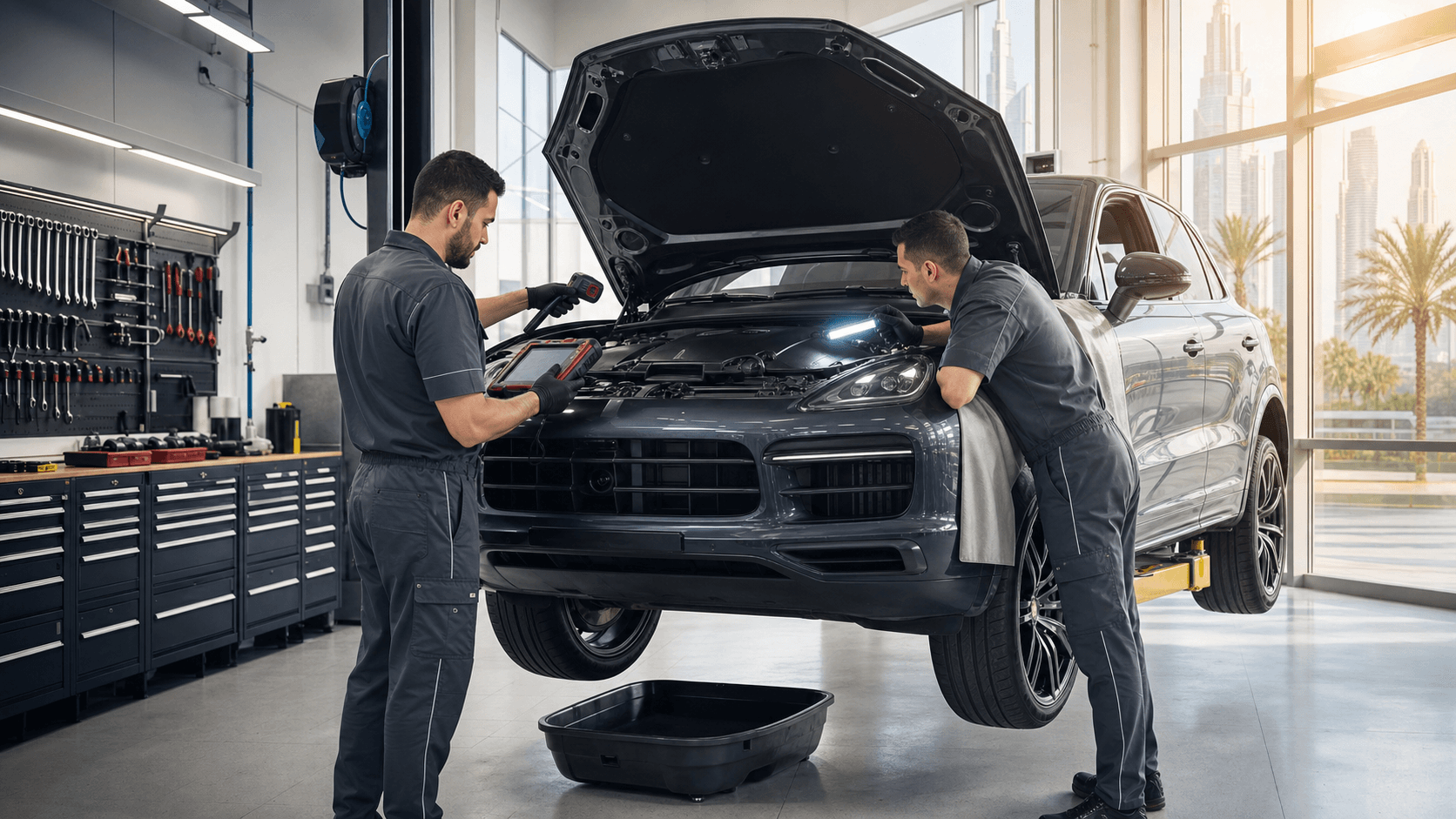
At Starpit, our Porsche maintenance includes detailed inspections of air filters, ventilation systems, and sensitive electronic sensors to catch and clean dust before it causes long-term harm. Our technicians use factory-approved cleaning methods and equipment designed for both interior and undercarriage care. Every service visit during late summer includes a full check of dust-prone areas and an assessment of how recent weather might have stressed your car's systems.
We always pay close attention to the small places dust likes to hide, around the suspension, inside brake calipers, and behind trim panels. Regular cleaning and testing stop the problems before they grow, and help the car's systems bounce back after months of exposure. Our process also protects seals and wires from the harm that comes with sticky grime, reducing the risk that electronics or comfort features suddenly stop working.
Our late summer approach means not just cleaning the outside but checking every system that's likely to take a beating from months of heat and dust. We catch the wear early and adjust parts or filters before they become a real headache. This keeps your Porsche running the way it should, no matter how long dust season lasts.
Protect Your Porsche from the Long-Term Effects
Late summer might not seem like the roughest time for a car, but it is often the period when problems finally start to surface. Dust levels have been building steadily since early spring, and the heat has pushed all your systems hard for months.
Letting a few light signs sit until they turn into breakdowns is not worth the risk. We have seen how skipping checks during this stretch can let dry gaskets, blocked filters, or dull sensors lead to performance drops that catch drivers off guard.
The dust is not going away, but that does not mean you have to let it keep wearing out the best parts of your drive. With steady attention and care, it is possible to keep the damage minimal and the road feel sharp, long after the storms have passed.
Book Late Summer Porsche Maintenance
Porsche owners in Dubai know how quickly dust can work its way into critical parts of your car, especially as summer wears on. When something feels off, noisy brakes, slow AC, uneven airflow, it pays to look beyond the surface. We help you spot early signs of wear and keep your ride feeling just right. For routine care, now is the perfect time to schedule your Porsche maintenance before small issues become bigger problems. Book your appointment with Starpit today and keep your car driving clean, cool, and comfortable.