Every Porsche owner knows the feeling. Something small feels a little off, but the car still drives fine. Maybe it's a light blink on the dashboard that goes away, or a subtle noise that wasn't there yesterday. With a packed workweek and temperatures hitting the high 40s by lunchtime, it's easy to talk yourself into waiting a little longer. The question is, should you wait or take the car into a Porsche workshop now?
Many drivers hesitate, especially when the issue seems minor and unpredictable. But summer heat doesn't spare small problems. In this post, we're going to talk through when it makes sense to visit a workshop and when it might be okay to hold off, as long as you're paying attention.
When Small Issues Start to Show Up
Sometimes the signs feel like hints. You hear a clunk that wasn't there before. Maybe your ignition feels sluggish, or a check engine light flashes just for a second.
- Any delay starting the car, even if it starts on the second try, can signal battery trouble or fuel delivery issues
- Sudden sounds like grinding, ticking, or rattling usually don't fix themselves
- Intermittent dashboard lights often point to sensors struggling with heat or voltage
The heat in Dubai accelerates wear. That vibration you felt last week might've been a loose belt. Wait too long and it could break, and then it's not just inconvenient, it's expensive. A simple fix today could become a full-day repair as the heat works on those already weakened parts.
Sometimes, these small signs can be easy to ignore. However, when they occur during a heatwave or mid-day traffic, even a quick problem can escalate before you know it. That is why noticing subtle changes can make a big difference in your overall cost and convenience. Paying attention to warning sounds or minor dashboard lights during the hottest months puts you ahead of the curve.
How Heat Affects Porsche Performance in Summer
Summer in Dubai doesn't hold back, especially in traffic. Once temperatures hit their peak, everything under your hood is under more pressure.
- Engines run hotter and rely more on proper lubrication and functioning cooling systems
- AC components cycle harder, especially when the cabin has soaked up midday heat
- Batteries drain faster when they're exposed to extreme temperatures for hours
One of the biggest risks comes when you're idling with the AC cranked, common during mall parking, school pickups, or waiting at checkpoints. The cooling system's working twice as hard while airflow across it is reduced. Minor issues like a weak fan or dirty coolant can fail quicker under those conditions. Small parts give way faster, leading to surprise breakdowns in places you don't want to be stranded.
The climate in Dubai, especially during summer, means that even brief stops with the engine running can put substantial pressure on every component. You might notice the AC blows less cool air the longer you sit in traffic, as the system battles the accumulated heat inside the car. Electrical systems, in particular, have to work harder, and if something is already worn, it may stop functioning with little warning. This is when keeping up with small fixes becomes necessary before trouble spreads.
What a Porsche Workshop Can Catch That You Can't
You might not see the problem, but that doesn't mean it's not there. Cars are good at hiding early signs, especially newer models that compensate for small irregularities.
That's where trained eyes make a difference. At a Porsche workshop, technicians dig deeper than surface checks.
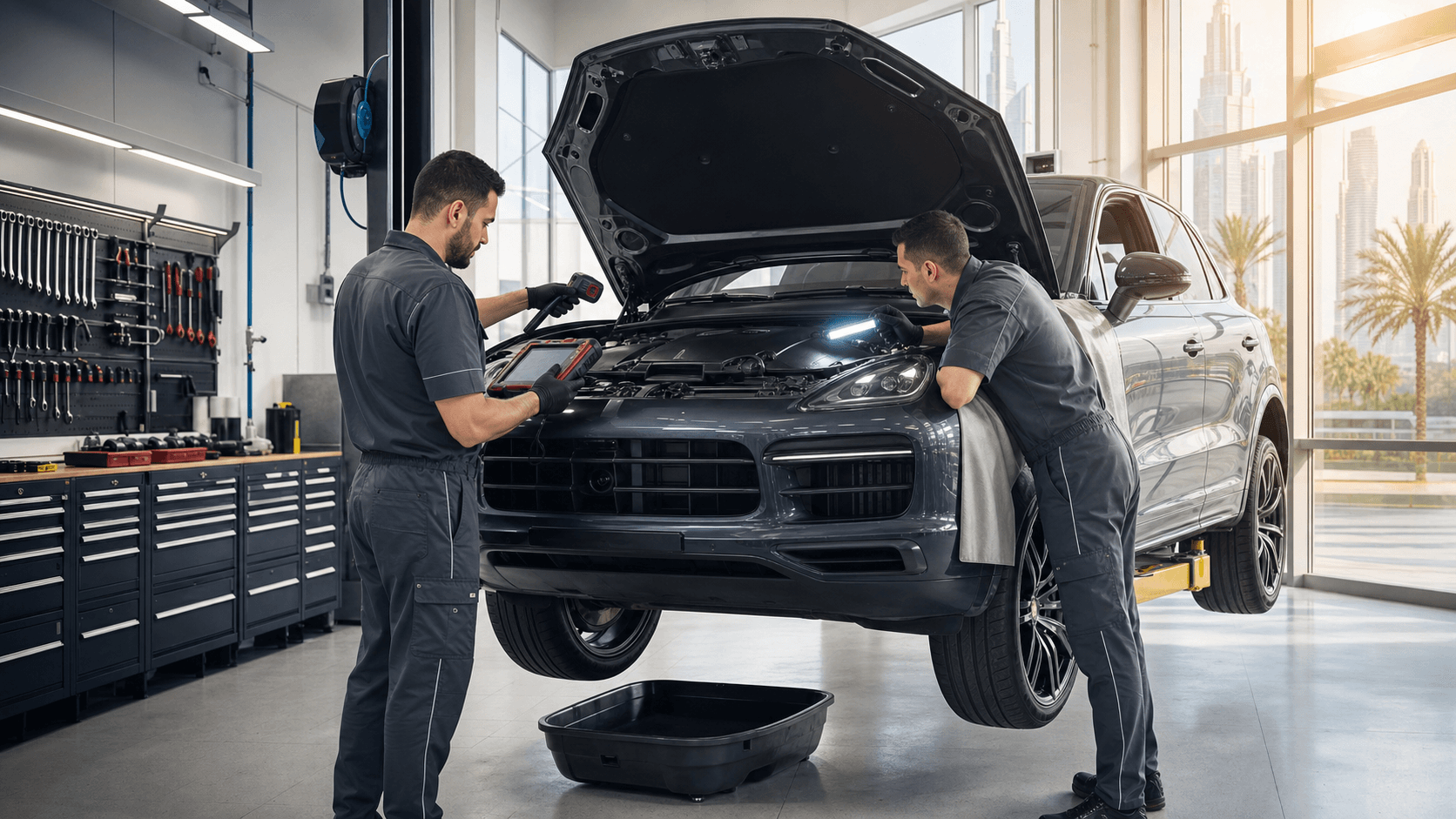
- They use vehicle diagnostics that read fault codes not yet visible on your dashboard
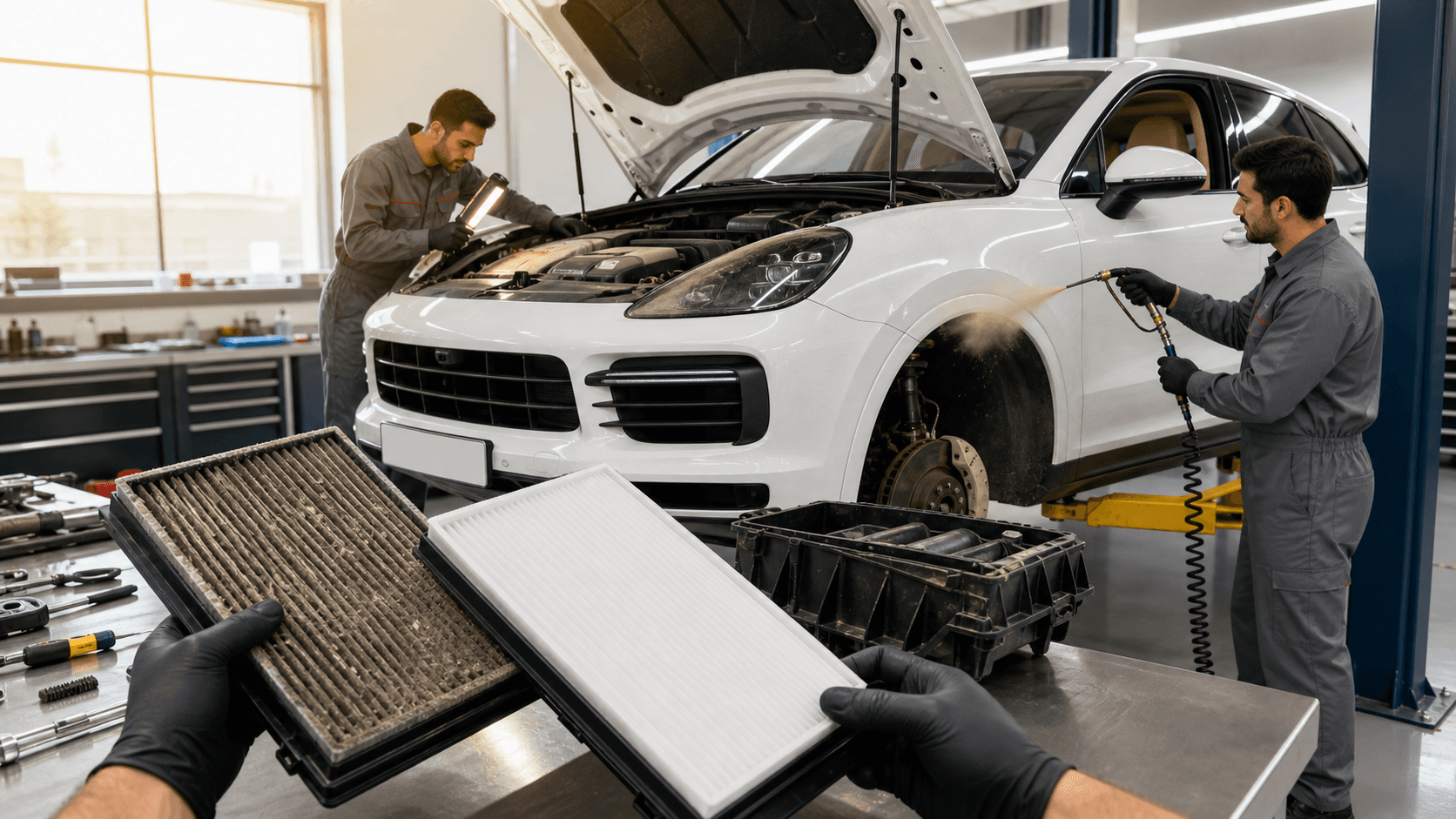
- They inspect belts, hoses, and seals that might look fine but feel brittle or worn by hand
- They test voltage under load to uncover battery issues shortly before they fail
It's not just about fixing what's wrong now. It's about catching the part that's next in line to break. A careful inspection prevents you from only finding out something was wrong when you're stuck in traffic or forced to pull over when the car just stops cooperating.
Technicians not only look at current faults but also consider what could wear out next, especially after recent repairs or maintenance. This kind of proactive inspection means that even if your Porsche seems fine, you gain valuable reassurance knowing that worn or stressed parts are replaced before failing at the worst possible time.
Risk of Waiting Too Long
Delaying service has a way of stacking problems. A slow coolant leak eventually leads to overheating. A minor oil seep can stress surrounding parts and throw engine sensors into chaos.
Sometimes, it feels like you got away with it, until you don't.
- Prolonged heat exposure weakens plastic parts like connectors and vacuum lines, causing them to crack
- Worn belts may snap, leading to the failure of critical systems like power steering or cooling
- Small issues with airflow or emissions can drift into full engine misfires
And, of course, roadside breakdowns always happen at the most inconvenient times. Whether you're about to drive to a meeting or picking someone up, the timing is never good. And towing in Dubai heat adds insult to injury.
In most cases, a delayed repair starts as something minor but becomes more complicated each day. The summer climate dries out seals, corrodes electrical contacts, and makes small leaks much worse. That is why it is safer to arrange needed service before risks multiply.
When It Might Be Safe to Wait
Not every issue means a trip to the shop right away. Some things don't pose a threat to the way your car runs, especially if temperatures outside are behaving.
- A door trim that rattles occasionally or small creaks from the interior probably don't need urgent attention
- Slow cooling from the AC when first starting could just be cabin heat, note if it improves after a few minutes
- A scheduling delay might be okay if your car runs smoothly, starts cleanly, and shows no temperature or performance warnings
If you're thinking about waiting a few days, stay alert. Take note of any unusual sounds, smells, or responses to acceleration. Keep your eye on the temperature gauge, especially during long drives or mid-day errands. If anything feels different day over day, it's safer to get it checked than to keep guessing.
It helps to keep a small log of any unusual activity during your drives, such as how long it takes the AC to cool the cabin, or if warning lights briefly appear and disappear. These short notes help you track whether a small annoyance is getting worse, and they are helpful for a workshop review later. Careful monitoring can buy a little time when you are busy, as long as you are honest about changes in your Porsche's behavior.
Full Porsche Workshop Support at Starpit
At Starpit, our workshop team uses Porsche-certified diagnostics and advanced repair tools to catch summer issues before they get worse. We perform in-depth inspections, offer digital service records with every visit, and stock genuine Porsche parts for quick repairs. With a climate-controlled service center, your vehicle is protected from the extreme Dubai heat during every check.
Don't Let a Delay Cost You More in the Long Run
A Porsche can handle a lot, but even the best-built machines have limits, and summer heat in Dubai doesn't leave much room for error. What starts as a quiet knock or a delayed crank can turn into full loss of function before you realize it.
The best way to avoid that kind of stress is to take the small signs seriously. Even if it doesn't feel urgent yet, early action often keeps your time, your wallet, and your ride in better shape. Letting it slide may seem convenient, but fixing that same issue later on comes with a steeper cost.
Don't let minor issues with your Porsche turn into major problems, especially with the Dubai heat putting extra strain on your vehicle. Our city's climate can accelerate wear and tear, so staying proactive matters. Booking a visit to our trusted Porsche workshop means our Starpit team can help you catch potential problems early and keep your Porsche performing at its best. Give us a call today to secure your appointment.