Spring doesn't just show up quietly in Dubai. The days get longer, the breeze feels warmer, and by late March, things start heating up fast. For a car built with precision like a Porsche, those early warmups aren't just a seasonal shift. They signal fresh demands on nearly every system under the hood, especially before summer heat kicks in fully.
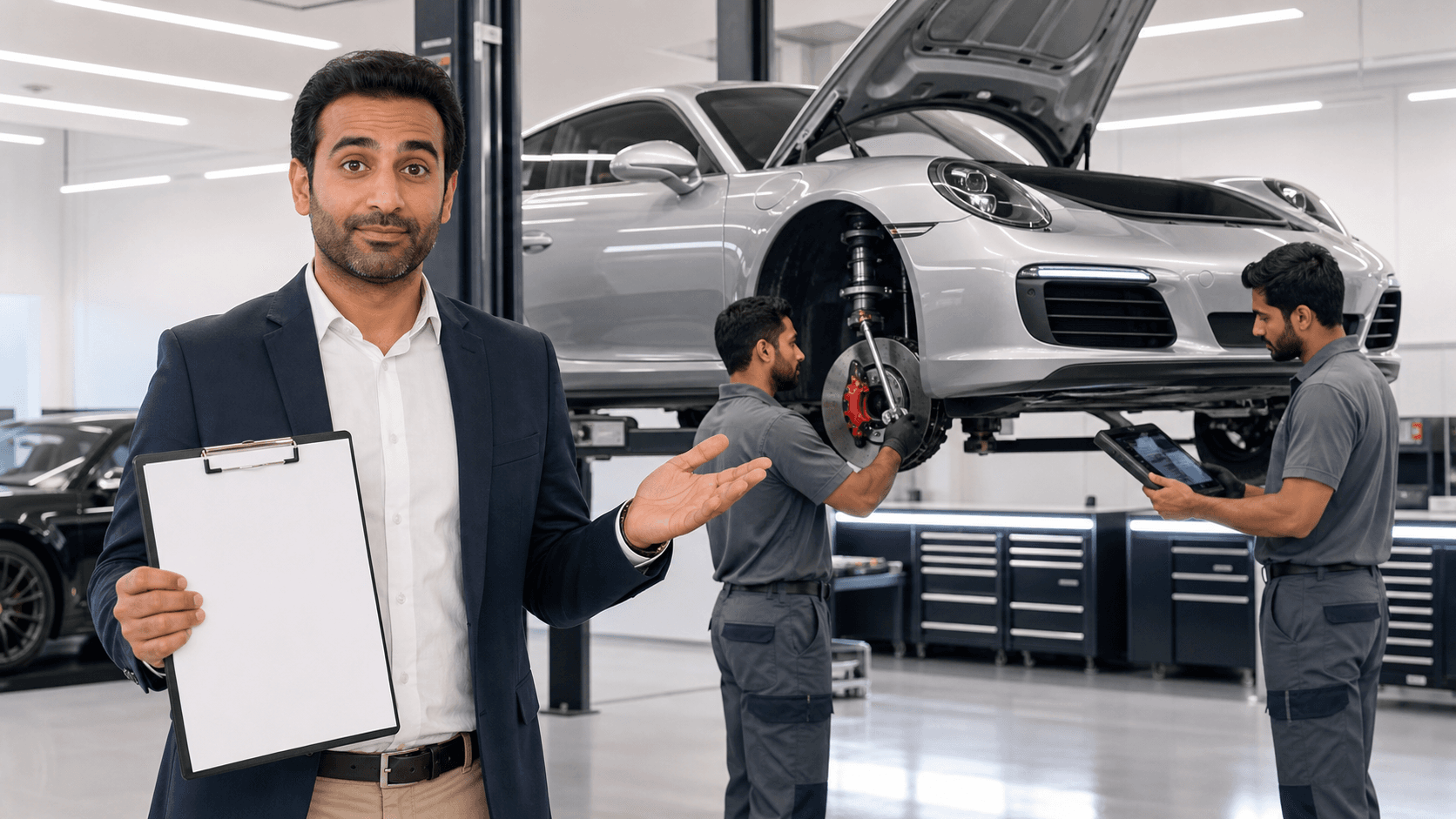
This is the point where we start checking everything a little more closely. If you're heading into the season without prepping for how high temperatures affect performance, you're going to feel it, and not in a good way. That's exactly why now is the right time to visit a trusted Porsche workshop in Dubai and run a few key checks while the car is still handling the climb well.
Heat and Engine Stress: What We Look For
Spring is when engine materials face new pressure. With average highs creeping past comfort levels, things under the hood start warming up before most drivers notice anything. But for us, that's already late. By the time a warning light flashes, heat may have already taken a toll on something important.
- Rubber components like seals and hoses start drying out and becoming brittle
- Plastic fittings and connectors can warp or crack more easily under sustained heat
- Timing belts might begin to stretch or lose shape if they hadn't been checked since cooler months
These aren't always obvious from the outside. That's why we monitor engine behavior differently during warmer months. Heat soak, when engine temperature stays high even after the car is off, can reveal early signs of struggle. We look at how fast the engine cools after use and whether it's trying too hard to regulate temperature when idle.
At a Porsche workshop in Dubai, we pay extra attention to how the engine handles the first few weeks of serious heat. It sets the tone for how the car will manage summer driving conditions.
Starpit's service lineup includes engine heat soak assessment and seal inspection as part of standard spring checks, detailed on our product pages for Porsche models in the region.
Preparing Cooling Systems for Desert Driving
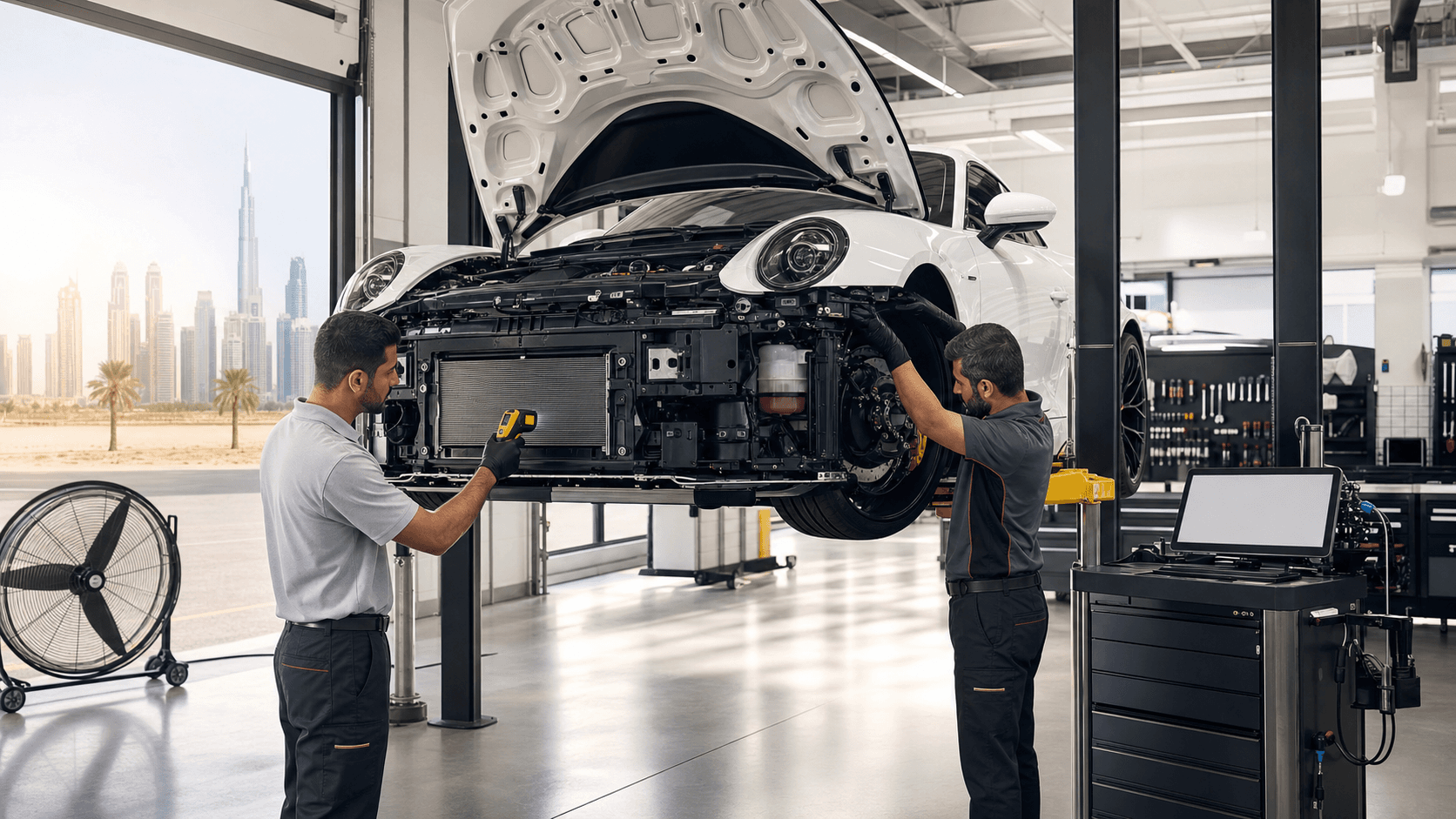
If there's one system that handles more than its share in a Dubai summer, it's the cooling system. It's not just about keeping the needle at the right spot, it's about doing it consistently under pressure.
- Radiator fins are inspected for dirt buildup and surface damage
- Fans are tested to make sure they kick in at the right moments in stop-and-go traffic
- Thermostats are checked for smooth operation, especially in shifts from idle to high RPMs
- Coolant mixture is reviewed to confirm it's balanced and not diluted from older fluid
Early spring gives us a window to top up or flush coolant before it faces extreme daytime temps. If the mix is off or the coolant is aged, its ability to move heat away from the engine drops quietly and quickly.
We also recommend watching for signs like a slow warm-up time, windshield fog on startup, or uneven cabin heat. These are quiet signs something may already be off in the cooling system.
Our Dubai workshop always uses Porsche-approved coolant and expert pressure testing to guarantee cooling system performance, a practice highlighted on our maintenance service pages.
Airflow and Filtration: Beating the Dust and Heat
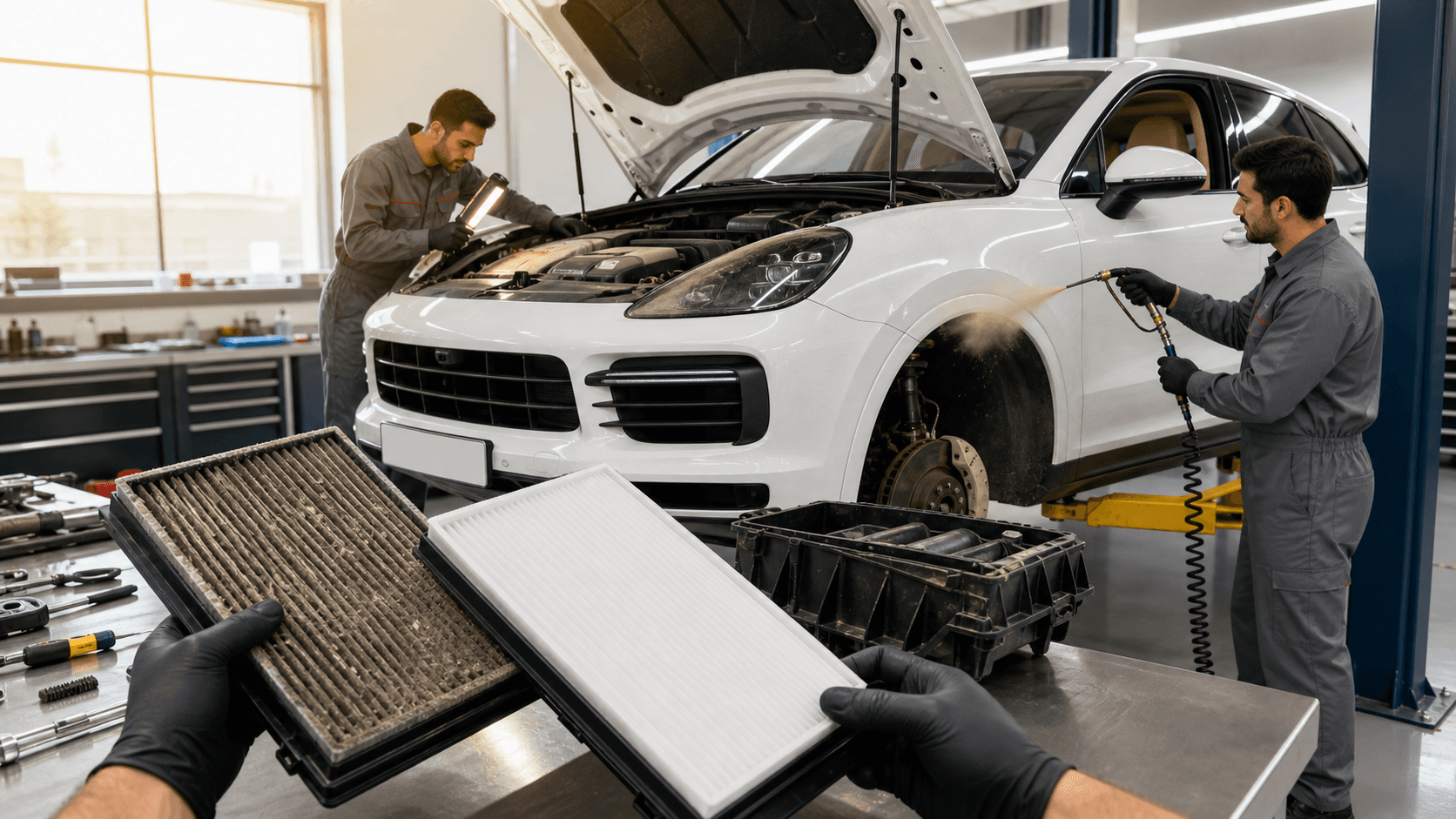
Dust is pretty much part of the air in Dubai, especially when wind picks up during seasonal changes. Add rising heat to that, and filters get a heavier workload than usual. Spring is one of the highest-risk points for clogged intake and cabin filters.
- We inspect cabin air filters to see how much dirt they've picked up over the cooler season
- Intake filters are checked to see if flow is restricted on revs
- If filters are clogged or aging, we replace them to make sure neither performance nor comfort suffers
When airflow drops, your engine's responsiveness takes a hit. You might also notice the AC working harder, or odd smells when you start the car. Most of these issues begin with blocked filters that don't look bad at first glance, but act much worse under repeated use.
We check for more than just grime. Heat causes older filter materials to break down faster, or sag and create uneven seals.
Our filter replacement services use genuine Porsche parts, maintaining fit and flow, and are always included in every spring readiness visit.
Tire Health and Road Contact in Hot Conditions
Tires carry every bit of weight and force your Porsche deals with. When street temperatures rise, so does the stress on those tires. That's why we give them a different kind of attention in the spring.
- Tread softening happens earlier than you'd expect as pavement heats up
- Sidewall cracking can show along stress lines you didn't see a few weeks ago
- Tire pressure shifts faster from morning to afternoon, even when they're technically within range
We look at wear patterns with fresh eyes this time of year. If one tire looks flatter, louder, or smoother than the others, it's worth noting. We often suggest adjusting pressure margins or rotating earlier than scheduled. It's a small move now that helps avoid big trouble later, especially when highways stay warm well past sunset.
Starpit's service pages specify that our spring inspections address tire wear, inflation cycles, and road force balancing, all tuned for Dubai's climate extremes.
Interior Systems and Driver Comfort Checks
Driving comfort isn't just temperature, it's how well your car responds inside when the outside heat turns up. Early spring is the best time to spot parts that might not handle full summer heat without warning.
- We test AC units before the real demand hits them, paying attention to both cooling and airflow direction
- Cabin sensors, from dash temp displays to auto-climate controllers, are tested under engine-on and accessory mode
- Plastic trim and interior panels are double-checked for shifting, rattling, or early surface cracks
Most drivers don't notice a weak AC system until the first really hot afternoon. That first late spring traffic jam is when any flaw that slipped through becomes obvious, and hard to ignore. We'd rather test it now, under light strain, and see how it's holding up with regular use.
Even cabin electronics that rarely fail under normal conditions can react differently once parked all day in sunlight. Sensors work harder, and touchscreen surfaces sometimes fade or misread input when overheated. Looks small, but it's another reason we start early.
Stay Ahead Before Dubai's Heat Peaks
By the time summer fully arrives in Dubai, a lot of parts on your Porsche will already be dealing with stress they weren't under just a few weeks ago. Spring isn't downtime, it's the warm-up lap before the real heat takes hold.
That's why we treat every inspection in early spring as a chance to listen more carefully. A good cooling system today means better driving when things hit their peak. Clean airflow and fresh tires now mean you don't have to second guess your next trip out. Every small adjustment early in the season helps your Porsche stay smooth, sharp, and ready for what's ahead.
Ensure your Porsche is ready to handle Dubai's intense summer heat by scheduling a comprehensive check at our Porsche workshop in Dubai. At Starpit, our expert technicians provide meticulous inspections of cooling systems, tire health, and more, ensuring your vehicle thrives in extreme conditions. Don't let the rising temperatures catch you off guard; bring your Porsche in for a service today and drive with confidence all season long.