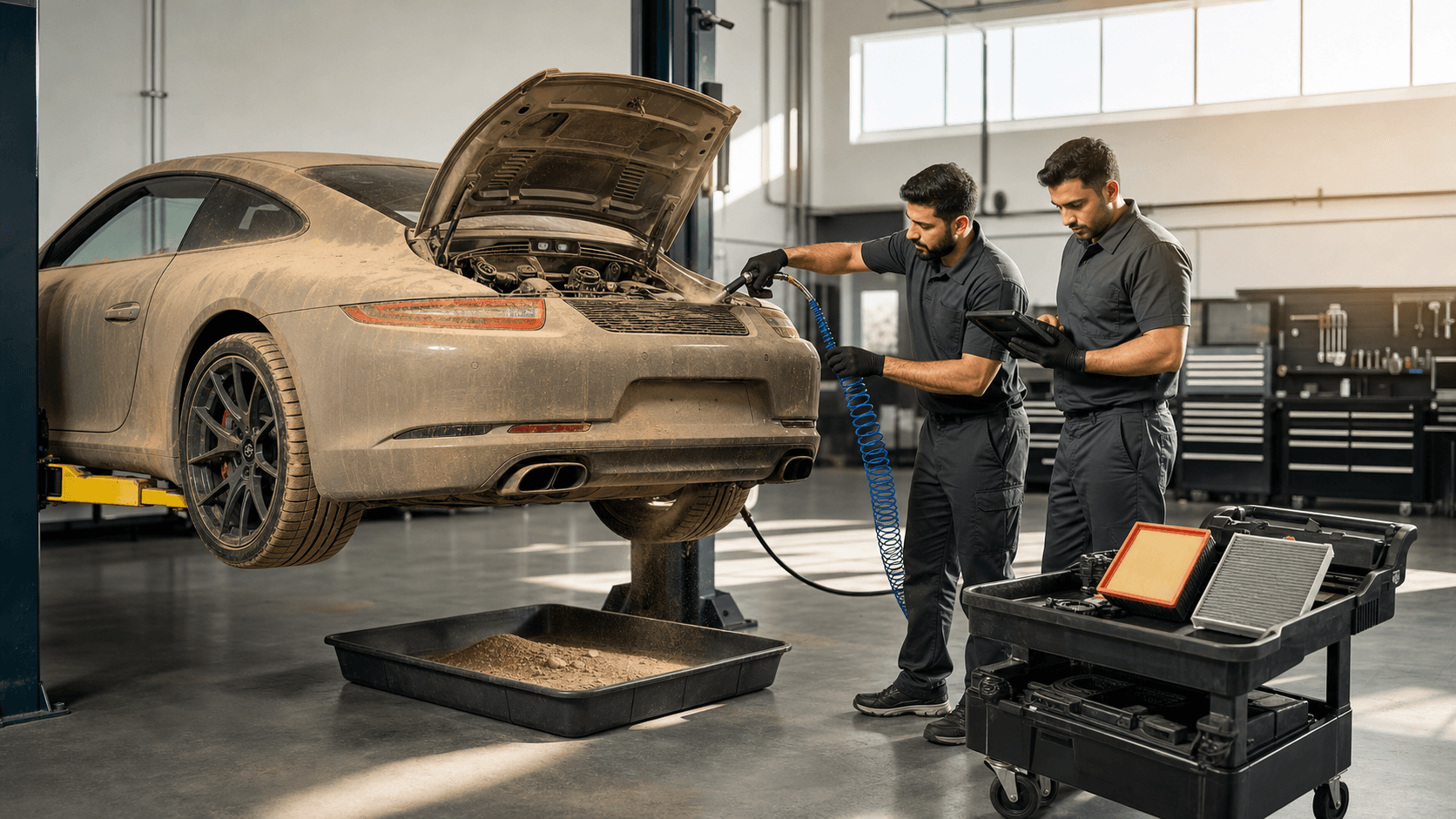
After a sandstorm rolls through Dubai, your Porsche might not feel the same on the road. Maybe the steering feels just a little tighter than before, or you're hearing sounds that weren't there last week. We've seen this happen plenty of times. Wind carries more than sand, it sneaks grit into places it's not supposed to go, coats filters and sensors, and stresses systems most drivers don't think about until something feels off.
That's why even small changes should be taken seriously. Sand and heat leave a mark that doesn't always show on the outside. If your car ran smoothly before the storm and now it doesn't, you're not imagining it. This is when it makes sense to start thinking about Porsche repair in Dubai, because catching trouble early can make the difference between a quick fix and ongoing damage.
What Sandstorms Really Do to Your Porsche
To most people, sand is just dust in the air. But for a Porsche, every airborne particle can cause issues. The biggest problem is how deeply that sand can move through the car, sometimes without showing up right away.
- Vents and air intakes often pull in fine sand that settles inside the system, affecting cabin airflow and putting strain on the fans
- Brake components can collect grit, which wears down pads faster or causes a scraping noise when stopping
- The engine bay isn't sealed completely, so sand blowing under the hood can sit on belts, hoses, and sensors
Inside the cabin, all that dust doesn't vanish. It gets drawn into filters, lands on screens, and can even affect how sensors communicate. Electrical systems and interior sensors are especially sensitive. If left alone, even your AC might struggle, or warning lights could flick on suddenly for no obvious reason.
Damage like this builds slowly. You won't always find a layer of mud or grime because it's dry and fine. And it's not just about what sand touches, it's what it leaves behind that wears your car down, bit by bit.
Strange Noises or Handling Changes to Watch For
After a storm, it's easy to overlook mild changes in how your car feels or sounds. But those small signs often mean something deeper is happening.
- You might feel more vibration in the steering wheel or notice it's a bit harder to turn at low speeds
- Pressing the brake pedal might give a softer response, or you could hear a gritty noise while slowing down
- The suspension could sound rougher when driving over bumps, especially if sand settled near shocks or control arms
None of these signs appear dramatic on their own. Most drivers brush them off, expecting them to fade with time. But that light vibration? It could be from uneven sand packed in the wheel housing. That extra brake travel? Could be early wear from grit working into the system. These small things add up quickly, turning a simple post-storm inspection into a necessary step rather than a precaution.
Why the Climate Makes Repairs More Urgent in Dubai
Here's what makes sand damage trickier here in Dubai, the heat. When sand-rich air passes through your car during a storm, some of that sand clings to surfaces. Then the sun bakes everything, drying the particles into the materials they sit on.
Heat turns soft grit into something harder. It dries rubber, stresses metal, and forces dusty buildup deeper into tight areas. So even after the skies clear, your car might start feeling worse with each drive.
The longer that grit sits, the more wear it causes without much warning. And since Dubai's weather can shift fast during late spring and early summer, back-to-back storms and rising temperatures leave little time for natural cleaning. That's why Porsche repair in Dubai has to happen quickly after these weather events. Letting heat and dust settle usually means more parts to clean, more systems to repair.
What Professional Inspections Catch That You Won't
Cleaning the exterior after a storm might make the paint shine again, but sand doesn't stop at the surface. If you're only washing the outside, you might miss larger problems quietly building underneath.
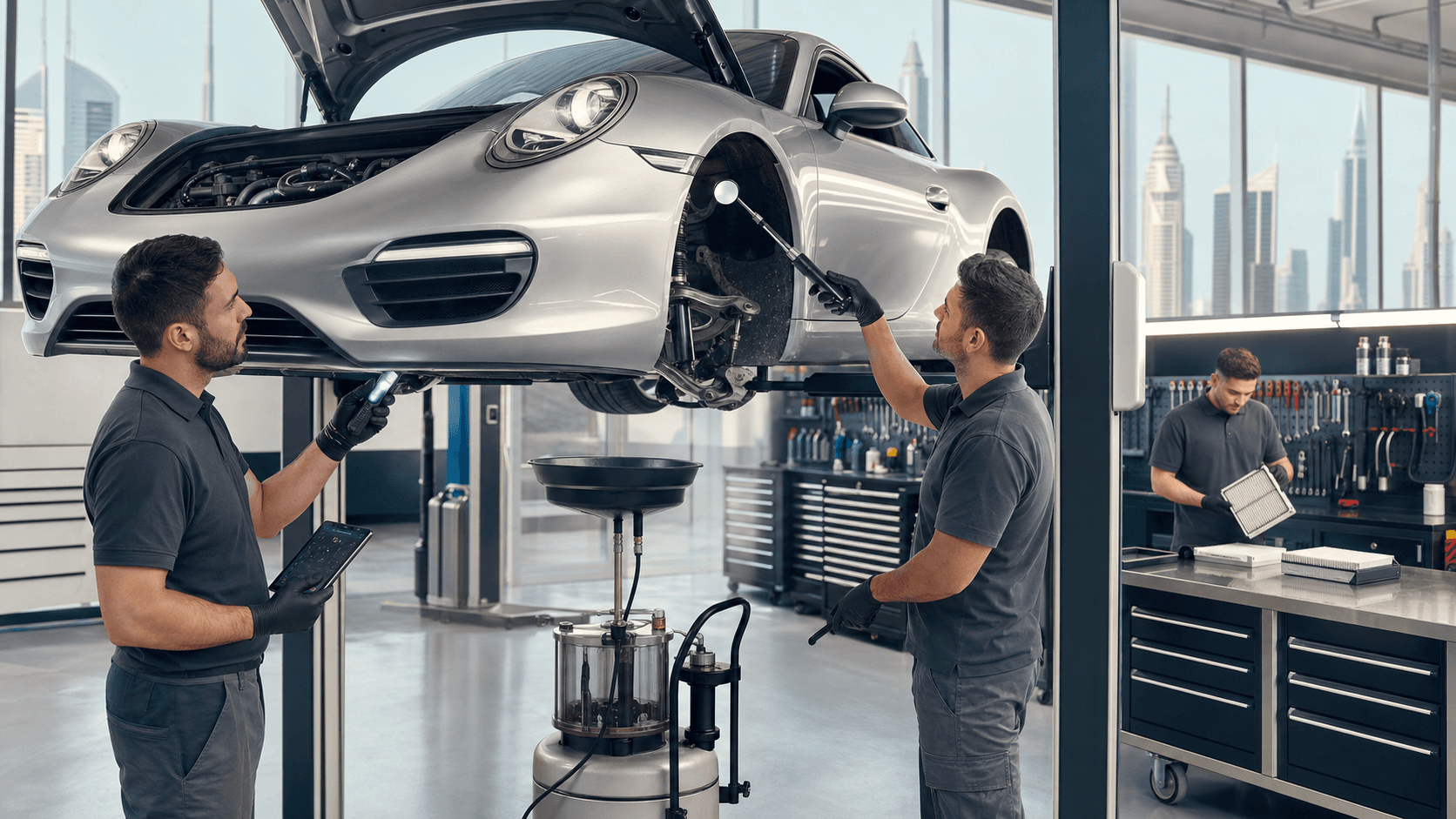
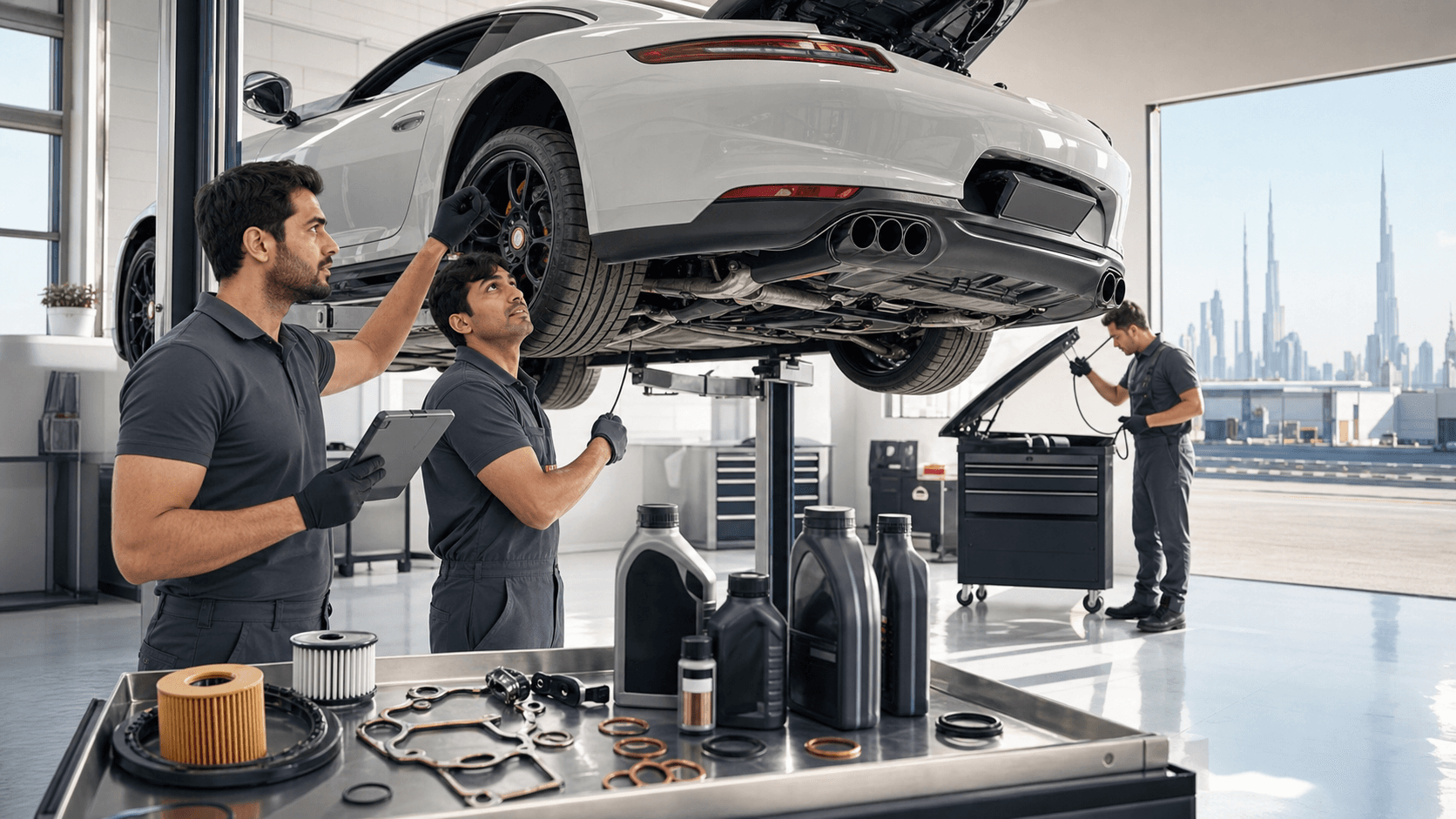
- Inspections under the car can reveal stuck debris, corrosion near the axles, or grit inside brake drums
- Diagnostics might show sensor miscommunication or overheating from clogged airflow vents
- Hidden cracks in hoses, fraying wires, or stuck parking brake mechanisms don't show up just by looking under the hood
Most of these problems aren't noticeable until they start interfering with how your Porsche drives or feels. They're often in hard-to-see or hard-to-access areas. That's why inspections need to go beyond a surface clean. Getting under the panels, into the systems, and through the electronics is what actually pinpoints where the damage is starting to build.
Waiting until performance starts to dip doesn't buy time, it just limits your options later.
Expert Porsche Repair Services After Sandstorms
At Starpit, our team uses diagnostic equipment designed for Porsche models to accurately spot sand and dust damage in hidden areas. We offer full undercarriage checks and electronic system scans, something not included in a regular wash or visual inspection. Each service is handled in our climate-controlled workshop to prevent new grit from entering sensitive components during repairs.
Staying Smooth Through the Next Sandstorm
After a big storm, it helps to listen closely. That extra sound during a turn or a new rattle over speed bumps, those faint changes are communication. And when we tune into those signals early, we often stop small problems from growing into large ones.
- Look out for new sounds, especially clicking, grinding, or high-pitched whines
- Pay attention to subtle changes in pedal feel, steering resistance, or suspension smoothness
- Don't rely just on how clean the car looks, damage often hides where you can't see it
Late spring and early summer in Dubai bring more sandstorms, followed by hotter and heavier air. That season change places more stress on damaged systems that didn't get checked after earlier storms. Spotting wear, filter clogs, or electrical quirks now means you're driving into tougher temperatures with a car that's ready for it.
Drive Confidently This Season
Knowing how your Porsche should drive is the best way to catch problems early. No one knows your car better than you, but sometimes the signs are just subtle enough to miss without a proper look. And that's how taking action now keeps things running sharp before the next storm comes through.
After a sandstorm, subtle signs can indicate deeper issues lurking within your Porsche. At Starpit, our skilled technicians excel at pinpointing these hidden problems to maintain your vehicle's peak performance. For reliable Porsche repair in Dubai, schedule an assessment with us today and ensure your car is well-prepared for the hotter months ahead. Trust us to keep your ride smooth and storm-ready.