Now that fall has landed in Dubai, morning drives start feeling different again. The heat eases, the roads quiet down a little, and plenty of Porsche owners take their cars out more often and for longer distances. That renewed use makes it easier to notice when something under the hood just is not right. Changes in sound, smell, or performance might seem small, but they often hint at early engine trouble.
We have seen firsthand how high-performance vehicles behave when small signs are missed too long. Awareness makes all the difference. Spotting problems early means avoiding bigger issues like deep mechanical failures or full engine rebuilds down the line. If you are wondering whether now is the time to pay attention, it is. Fall is when subtle engine issues often show their first signs, especially in performance models like Porsche. Catching them early can make Porsche engine repair in Dubai far less stressful.
Warning Signs You Might Ignore at First
Most engine problems do not start loud or obvious. They creep in slowly, often beginning with sounds or movements that are easy to brush off. During fall, these signs are more likely to show up as driving patterns change.
- A slight shaking when the engine idles, or the car hesitates for a moment when you accelerate
- Unusual smells during or after long drives, like something burning or slightly off, often oil or coolant vapors
- A soft ticking or louder hum from under the hood, even when the road is smooth and traffic is light
We get it, these things do not always suggest an emergency. But when they show up together or do not go away, they are no longer small.
What Dashboard Lights Do Not Tell You
Relying on a dashboard alert can sometimes leave you two steps behind. Check Engine lights do not always show up in the early stages of engine stress, especially with newer performance systems that try to adapt before warning the driver.
- Some warning signs only show up during strain, like climbing a long hill or pushing the car during high-speed driving
- Other times, the car sounds fine but does not feel as smooth, and the numbers on the gauges are just slightly off
- Just because the engine starts and runs does not mean it is running cleanly or at full strength
That is why it is important to pay close attention when your car feels even a little off. It is often the sign you will not get on a screen or a code.
Environmental Stress on Porsche Engines in Dubai
Dubai's climate adds another layer of wear that is not always visible. The summer heat alone can stretch seals, degrade fluids, and reduce the life of electronic parts faster than most people expect.
- Heat exposure can make engine gaskets brittle, especially if the car sat for weeks during peak summer
- Daily short trips in city traffic wear parts differently than occasional long drives. Mixing the two can create unpredictable stress patterns
- October is when people start driving more often again, so any wear from the last few months begins to matter more
That change in pace is often the moment engine wear makes itself known. Listening and watching how the car responds helps you stay on top of it.
How a Trained Eye Spots Early Trouble
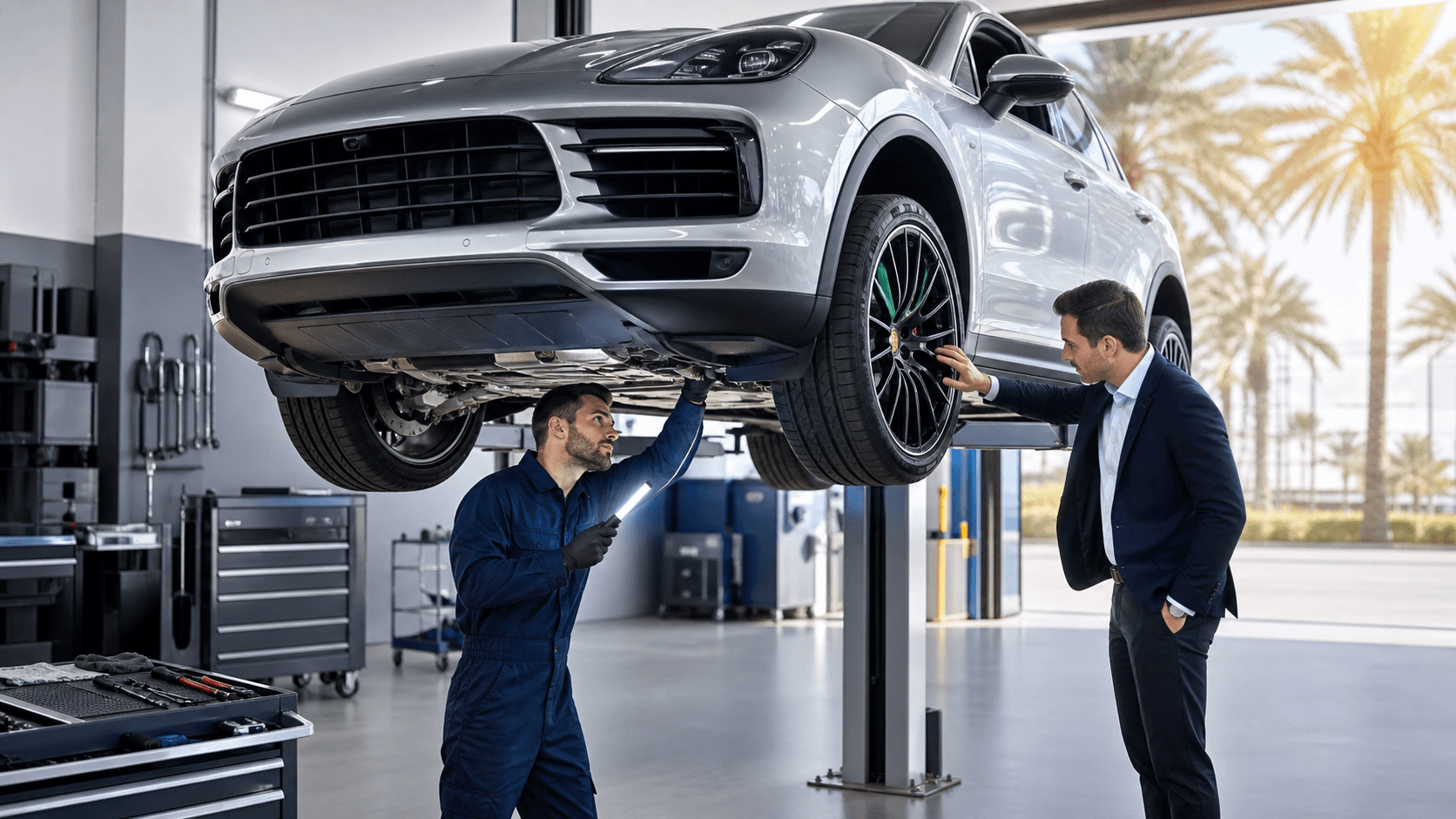
Even if nothing big feels wrong, trained technicians can see and hear problem signs most drivers will miss. These early indicators often show up well before anything fails.
- A puff of white or blue exhaust smoke during startup or after idling? That can show fluid leaks starting to reach the combustion chamber
- A belt that wobbles lightly or a hose with hairline cracks is not always audible while driving, but it is a warning sign noticed during basic inspections
- In a city like Dubai, patterns of high-speed weekend runs followed by slow week commutes can wear parts in very specific ways
Knowledge of how those patterns affect Porsche engines means small signs are not missed.
What to Track Between Visits
We always recommend keeping tabs on your car between service visits. You do not need to open everything up, but your own senses will often tell you when something shifts.
- Listen for changes in how the engine sounds at startup or under load. Is it louder, slower, or starting rougher than before?
- Check the fluids weekly. Look for low levels, odd colors, or unusual thickness in oil and coolant
- Watch engine temperature closely. If it starts rising faster than usual or takes too long to warm up, it can point to cooling issues or internal friction
Any change is worth recording, even if it is slight. We would rather see a car when the signs are small, not when it is already in distress.
Starpit Engine Diagnostics and Care
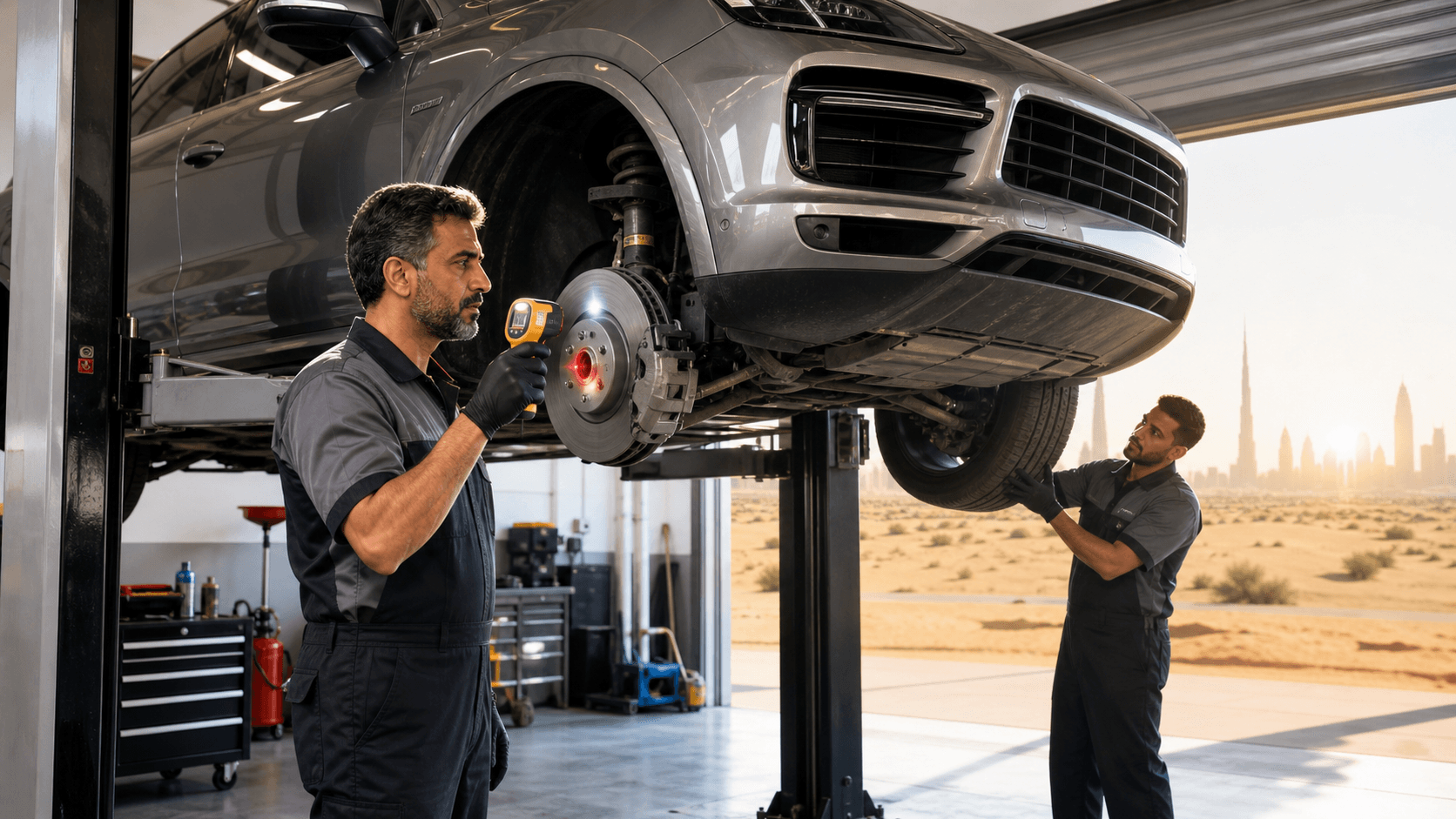
At Starpit, our team uses original Porsche diagnostic tools to scan for hidden issues and checks your engine for heat-related wear or irregularities. Each engine repair or inspection is backed by detailed digital records and genuine Porsche parts to keep everything running at its best. Our technicians have experience with climate-driven problems unique to Dubai, from worn gaskets to premature fluid breakdown.
Keep Performance Strong Without Surprises
Engine issues do not always show up with a bang. Most build slowly, and fall is when those shifts tend to surface. After a long summer and light use, many Porsches return to regular driving just as older issues begin to rise to the top.
Spotting signs early keeps you in control. Awareness does not have to mean worry. You are staying ahead of bigger problems and treating your car the way it deserves to be treated. Let October be the month you keep performance in check, before winter roads and traffic give problems the space to grow.
Book Your Porsche Engine Check
Noticing unusual sounds or temperature changes in your Porsche could signal deeper engine issues, especially after the summer months. At Starpit, our technicians specialize in identifying and resolving concerns with Porsche engine repair in Dubai. Call us today and we will schedule a convenient time to inspect your vehicle and keep it performing at its best.