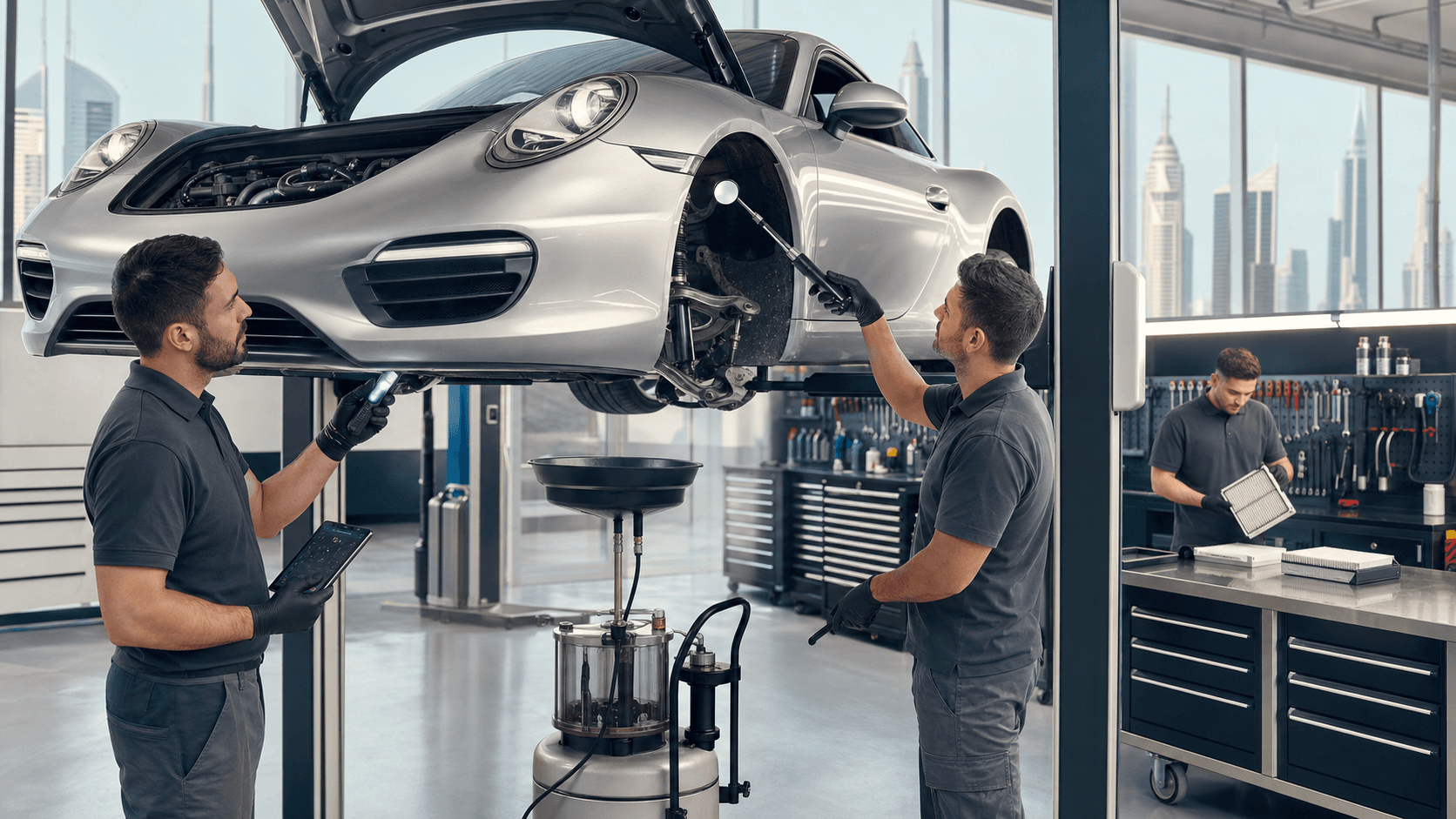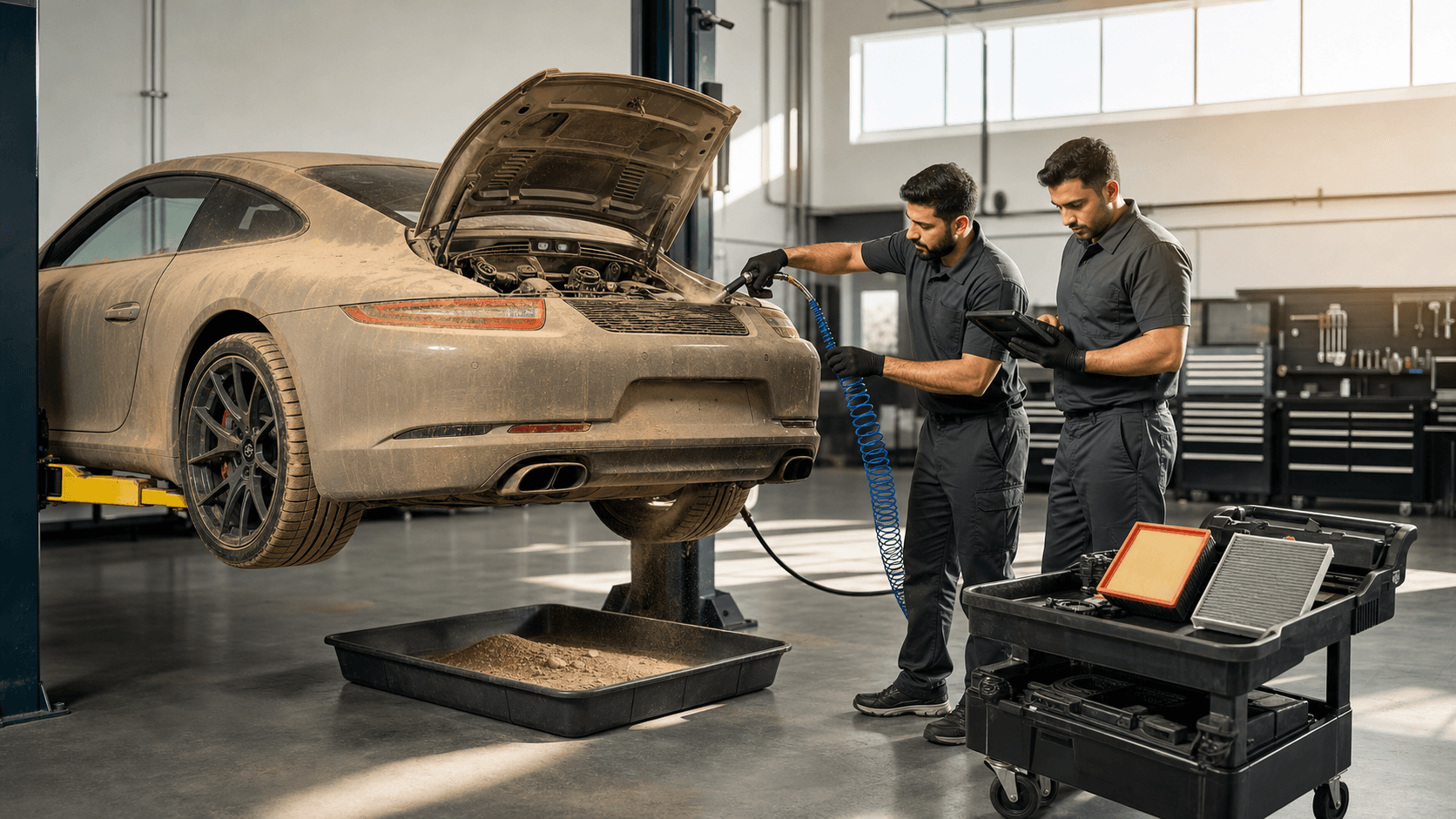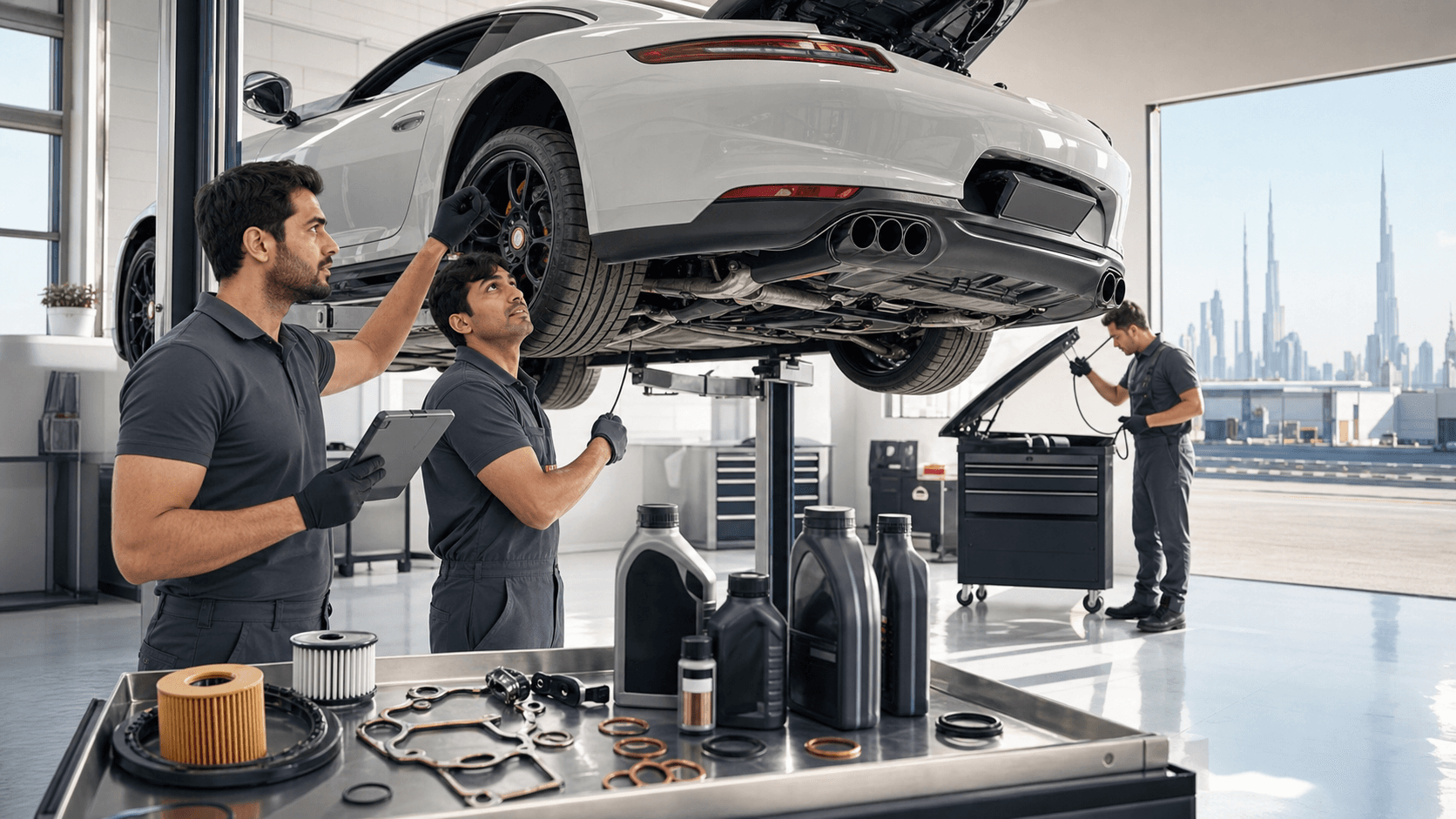
Porsche maintenance in Dubai may seem simple on the surface, but warm spring conditions bring challenges that are easy to overlook. As summer edges in, we see more cases where small issues are tied to things that weren't checked closely enough.
Most Porsche owners stay on top of scheduled service, yet some parts of the car don't always get the attention they need. A few skipped details here and there can quietly take a toll on the car's performance and long-term condition. Spring is the perfect time to check for these blind spots before the hotter months push everything harder.
Missed Fluids That Don't Get Enough Attention
We usually think about oil and maybe coolant, but there are three other fluids that deserve more attention than they get.
- Brake fluid slowly picks up moisture over time. This doesn't always show up in feel or pedal response until the car has to stop hard at high speeds. If this fluid is old or degraded, braking strength goes soft without much warning.
- Power steering fluid may seem fine since it's not something you see or hear every day. But when this fluid loses its original properties, steering becomes less responsive, especially during sharp turns or low-speed movement.
- Wiper fluid and coolant are especially important in spring. Spring air in Dubai carries a lot of dust, which clogs windshields fast. With temperatures already climbing, coolant that's too weak or low causes internal pressure to spike sooner than expected.
Skipping over these can lead to shorter component life, small leaks, or systems not working as well as they should. Taking care of the right fluids at the right time keeps performance steady before summer hits.
Tire Damage That Looks Fine at First Glance
A quick look can't always show what tires have really been through. Dubai's roads heat up fast in May, and that wears down tires differently than cooler seasons.
- Sidewall fatigue can be missed entirely if the car sits still when checked. These cracks show up from heat soaking through the rubber repeatedly while driving.
- Tread might pass a visual inspection, but uneven patterns cause slight pull or vibration. Sometimes this is chalked up to alignment, but deeper inspection often finds wear patterns developing from under-inflation during warm days.
- Tire pressure readings change with surface heat. A tire can be dangerously low at night yet look normal by noon. This daily shift hides slow leaks or uneven responses between tires.
It's more than just rotating or replacing them. A full spring tire check should include inner wall checks and off-rim inspection when needed. Small warning signs here often go unnoticed until roads get hotter and grip fades.
Cabin Air Filters and How They Affect Spring Driving
Air filters inside the cabin get ignored a lot, but you can usually feel when they need changing, you just might not realize what's causing the problem.
- In spring, pollen and fine dust move through the air more often. This clogs cabin filters faster and can make airflow feel weaker even if your AC is running strong.
- A slightly musty or "tired" smell might come from buildup in the filter housing. It doesn't take much to make the inside of the car feel stuffy or less comfortable.
- Blocked filters make the AC work harder. That shortens its lifespan quietly over time, especially during parts of the day when temperatures climb fast then fall just as quickly.
We've seen cases where filter changes made a big difference, not just in comfort, but in how quiet and steady the cabin remained during daily driving.
Underrated Electrical System Checks
Heat doesn't just wear out parts you can see. It plays tricks with parts under covers, behind panels, and tucked away under the hood.
- A battery that starts fine one day and struggles the next may show signs of summer fatigue a few weeks early. Spring heat mixed with cool mornings creates voltage dips most drivers don't notice.
- Fuses and wiring terminals can expand and shrink day to night. Loose or weathered contacts may cause things like flashing dashboard lights, skipping radio signals, or backlight issues.
- Weak signal lights or slow mirror fold-ins may not stop the car, but they point to circuit issues in need of early inspection.
Most of this doesn't show up on regular scans until the problem grows. A close look at spring wiring and contact points often reveals where heat is starting to create strain.
Tech Features That Stop Working Slowly
Many modern features in Porsche vehicles don't fail all at once. Instead, they slow down, misread, or become inconsistent without clearly breaking.
- Adaptive cruise, lane assist, and backup sensors work through sensors we can't always see. If those get dusty or thrown off by heat-related flex in panels, their response time gets patchy without showing a fault light.
- Central processing for driver-assist features can feel like it's "thinking" a bit longer. That tiny delay may grow without notice over a few weeks.
- Drive modes that adjust things like throttle response or transmission feel may seem off one day and fine the next. This can be due to calibration drift from power draw or temperature changes inside system modules.
The best time to catch these slow-fail symptoms is spring. Once the heat settles in for summer, electronics don't get much recovery time during overnight cool-down.
Why Skipping the Small Stuff Leads to Bigger Problems
None of these issues are dramatic on their own. A low fluid level here or a delay in sensor response there won't stop the car today. But stacked together, they become the start of much larger problems that are harder to trace months later.
Pro-Grade Inspections for Every Season
Spring is when we spot the early signs. The roads are already heating up in Dubai, traffic flows change with the season, and hidden wear starts to show if you know where to look. When Porsche maintenance in Dubai includes these overlooked checks, the vehicle stays steady from late spring through summer heat.
Every season has its own pressure, but the switch between spring days and hot nights demands more awareness. Getting ahead of these checks means fewer surprises and a smoother drive all season.
Stay Ahead of Dubai's Spring Maintenance Curve
Don't let overlooked details impact your Porsche's performance as Dubai heats up this spring. Our expert team at Starpit specializes in thorough Porsche maintenance in Dubai, ensuring all essential checks keep your vehicle running smoothly and efficiently. Book your appointment now and ensure every drive is as seamless and enjoyable as it should be, all season long.